
Can Google Forms be Used to Upload Files to my Google Drive?
Short version: it works through a built-in File Upload question, and it works well enough for a small group of coworkers. The trouble starts the moment you share the form with anyone outside your own organization. The rest of this guide walks through exactly where Google Forms holds up, where it breaks down, and the alternative most people land on when it does.
What Google Forms can actually do for file uploads
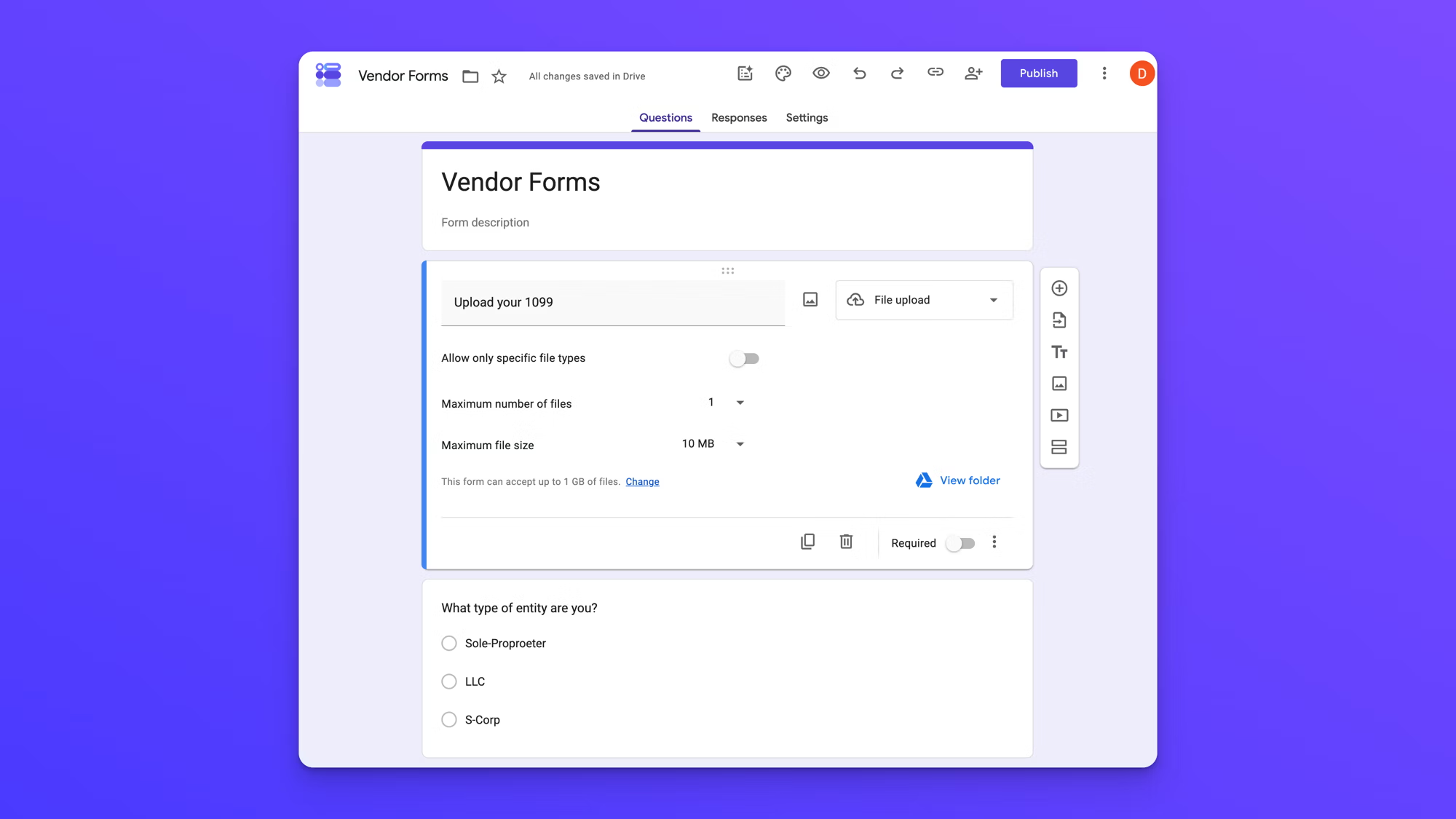
Google Forms has a dedicated "File upload" question type. Once you add it, you can:
- Restrict uploads to specific file categories (Document, Spreadsheet, PDF, Presentation, Image, Video, or Audio)
- Set a maximum number of files per response (1, 5, or 10)
- Set a maximum file size per file (1 MB, 10 MB, 100 MB, 1 GB, or 10 GB)
- Set a total storage cap for the form (1 GB by default, up to 1 TB depending on your Drive storage)
Responses are saved in a dedicated folder inside your Google Drive, one folder per form. Form data (not the files) can be exported to Google Sheets for tracking. For a team submitting weekly reports or a teacher collecting assignments from students who all have Google accounts, that is genuinely enough.
The limitations that push most people to an alternative
As soon as your use case extends beyond "my coworkers with Google accounts," Google Forms runs into real walls.
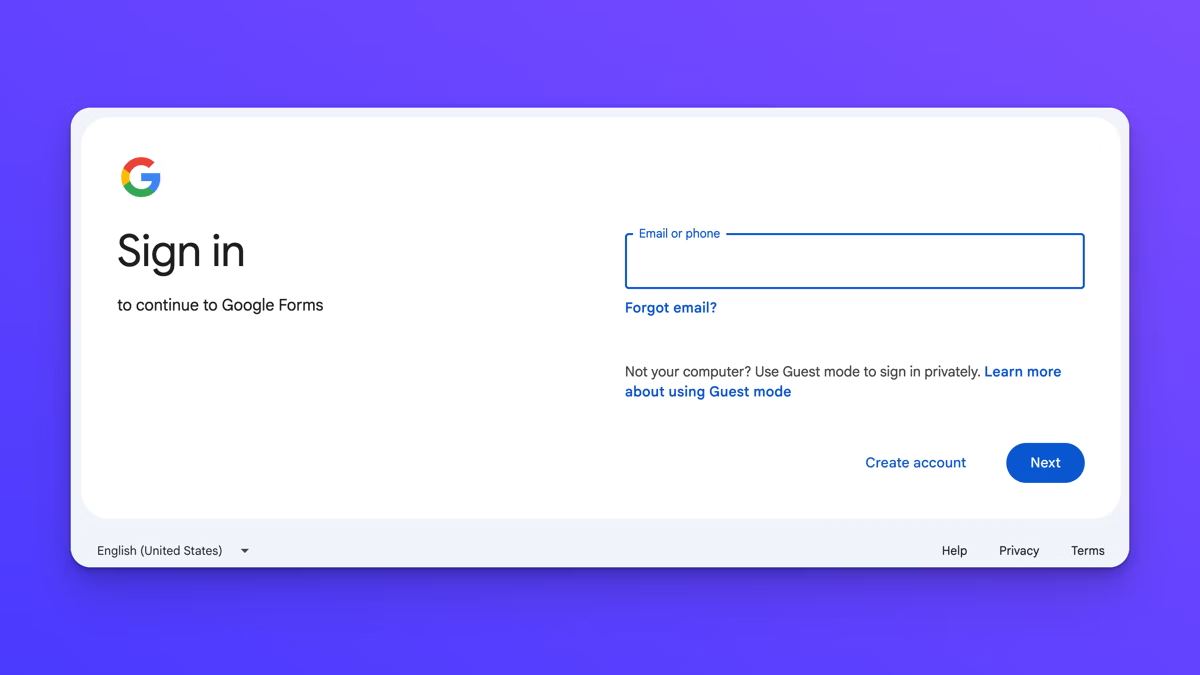
Sign-in is mandatory for file uploads
The moment you add a File Upload question, Google displays this notice: "Respondents will be required to sign in to Google when file upload fields are added to a form." This is not a setting you can turn off. Every respondent, every time, has to sign in.
Making the form public does not change this. Removing the "restrict to your organization" setting does not change this. If a respondent does not have a Google account, they cannot upload a file. Full stop.
For client work, vendor collection, event submissions, or anything public facing, this is the dealbreaker. If you want the opposite of this, see how to let anyone upload files to your Google Drive without signing in.
File upload forms cannot be embedded on a website
If your form has a File Upload question, Google displays this message when you try to embed it: "This form cannot be embedded because it makes use of File Upload fields." So you cannot put the form on your WordPress, Webflow, Wix, or Squarespace site. You are stuck sending people to a forms.google.com URL.
File upload requires a Google Workspace account
File upload is largely a Workspace feature. If you are using a personal Gmail account, the File Upload question type may not even appear as an option. It is built for businesses, schools, and organizations that pay for Workspace.
The form cannot live in a Shared Drive
If your Google Form is stored in a Shared Drive (formerly Team Drive), File Upload questions are disabled. The form has to live in someone's personal My Drive for the feature to work. That creates an ownership problem: if the form owner leaves the organization, the form (and its file destination folder) may go with them.
Files count against your Google Drive storage
Every file uploaded through Google Forms counts against your Drive storage, not the respondent's. If you are collecting high-resolution photos or video files from a hundred people, that can eat your storage quota fast. When you run out, the form stops accepting submissions.
No branding on the form
Google Forms displays the Google logo and uses Google's font stack. You can add a header image and pick a theme color, but the form is visibly a Google Form. For client-facing intake, that is a branding miss.
Respondents see a clunky experience on mobile
The File Upload field on mobile can be awkward, especially for respondents who are not already signed in. They hit a sign-in wall, then a permissions request, then the upload. Drop-off on mobile with file uploads is real.
Why file upload is greyed out, missing, or rejected in Google Forms
If the File Upload option is greyed out, missing entirely, or your respondents keep hitting a "Server rejected" error, the cause is almost always one of a few known issues. Here is how to tell them apart.
The File Upload option is greyed out or missing
Three causes account for nearly all of these:
- Your form lives in a Shared Drive. Google Forms does not support File Upload questions on forms stored in a Shared Drive (formerly Team Drive). If you built the form in My Drive and later moved it, the option breaks. The message you may see is "Forms containing file upload questions are not currently supported in shared drives." The fix is to move the form back to your personal My Drive, or rebuild it there.
- You are on a personal Gmail account. File upload is primarily a Google Workspace feature. On a personal account the option is often missing or disabled.
- Your Workspace admin has restricted it. On a managed Workspace account, an administrator can disable file uploads or external sharing at the domain level. If the toggle is greyed out and you are on Workspace, check with your admin.
The "Server rejected" error
When a respondent selects a file and sees "Server rejected," the usual causes are:
- They are not signed in, or are signed in with a non-Google account. A school or work email that is not actually a Google account will be blocked, because file upload requires a Google sign-in. This is the most common cause on public forms, and it is the same wall that turns away clients, vendors, and event attendees.
- The file is larger than the limit you set, or is a type your form does not allow.
- An unstable connection interrupted the upload.
The first cause is the important one. If you are collecting from people outside your organization, a large share of them will not have a Google account, and every one of them will hit this error.
EZ File Drop: the alternative built for this
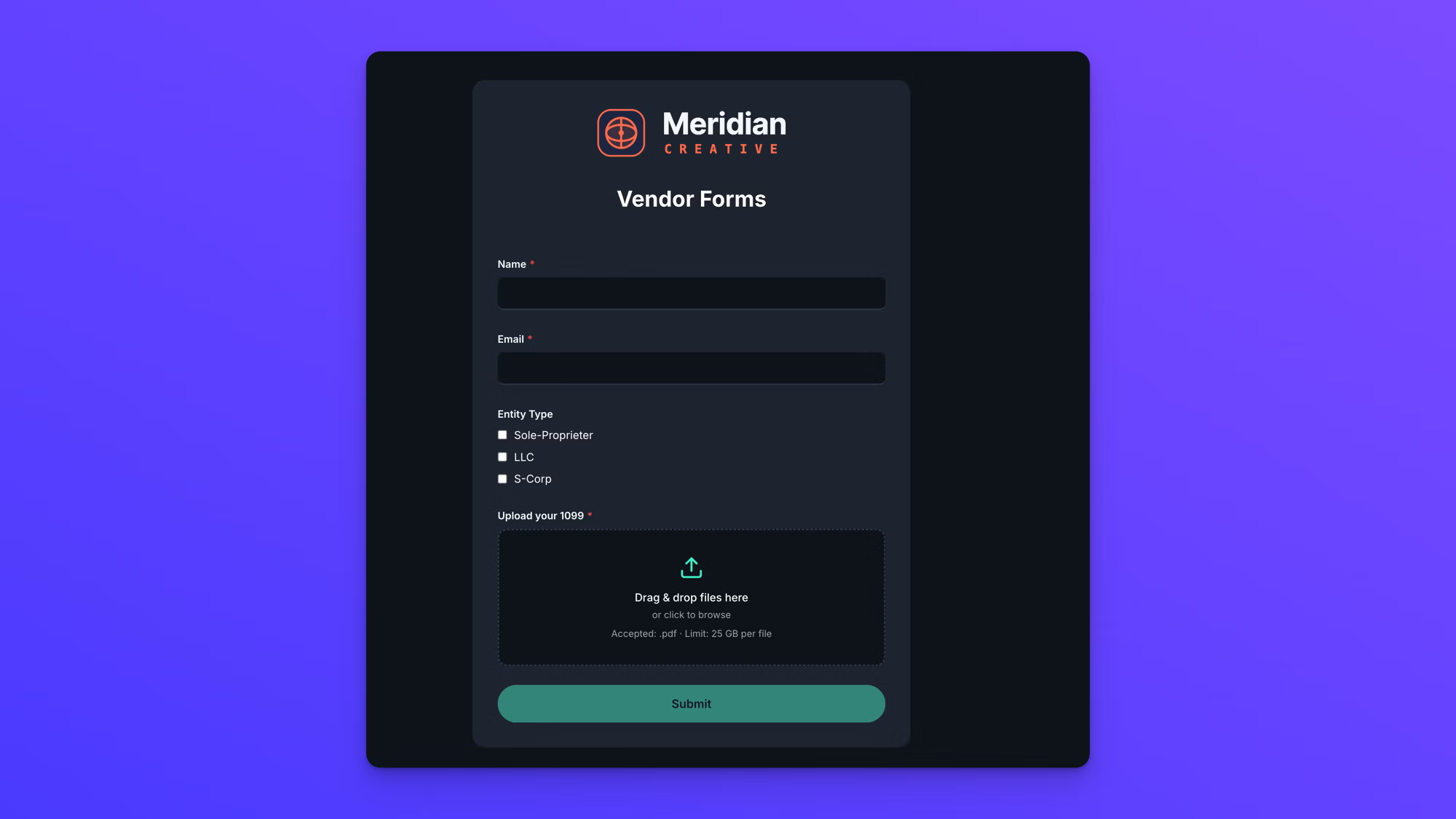
EZ File Drop solves the gaps Google Forms has by building a file collection tool from the ground up, then connecting it to your existing Google Drive.
Here is what is different:
- No sign-in required. Anyone with a browser can submit files, Google account or not. This is the single biggest difference.
- Embeddable on any site. WordPress, Webflow, Wix, Squarespace, or any page that supports HTML embeds. The embed code includes toggles for showing or hiding the logo, header, and page text.
- Fully branded. Write your own copy in your own voice on any plan. On Business and Premium, add your own logo and custom colors and fonts and fully white-label the form.
- Any cloud storage. EZ File Drop connects to Google Drive, Dropbox, Microsoft OneDrive, Box, SharePoint, or a custom FTP server. Each form can route to its own destination.
- Dynamic file organization. Form field data can automatically sort uploads into subfolders and rename incoming files, and you can combine fields. A form that collects a project name and an uploader name can route every file into a subfolder named for the project, with each filename prefixed by the uploader. So a photo from Sarah Johnson for the Website Redesign project arrives as "Sarah Johnson - headshot.jpg" inside the "Website Redesign" folder. If that folder already exists, new uploads go into it rather than creating a duplicate. No manual sorting, no guessing who sent what.
- Larger uploads, sized to your work. Per-submission limits scale with your plan, up to 25 GB on Business and Premium (5 GB on Starter). That means clients can send the kind of files your work actually involves, raw photos, video projects, large document batches, without splitting them across multiple uploads. Google Forms caps individual files at 10 GB.
- Google Sheets sync. Form submission data can sync to a Google Sheet, giving you a running log of every upload alongside whatever fields your form collects.
Google Forms vs. EZ File Drop at a glance
When Google Forms is the right choice
Not every file-collection task needs a dedicated tool. Google Forms is fine when:
- You are collecting files from people who already have Google Workspace accounts in your organization
- You do not need the form embedded on a website
- You do not need custom branding
- The file sizes are modest and the volume is low
- You do not need files organized into named subfolders automatically
For those situations, Google Forms is free, familiar, and gets the job done.
When to reach for EZ File Drop instead
The case for EZ File Drop shows up when:
- The people sending files do not have Google accounts (clients, vendors, event attendees, the public)
- You want the form on your own website
- The form needs to look like it belongs to your brand
- You are collecting large files or high volumes
- You need incoming files sorted automatically by submitter or project
- You want to send files to Dropbox, OneDrive, SharePoint, or Box, not just Google Drive
In those cases, Google Forms' limitations cost real time: lost submissions from people who bounce at the sign-in wall, manual file sorting, and a form that looks like a survey tool instead of your business.
Frequently asked questions
Can Google Forms upload files without requiring sign-in?
No. The moment you add a File Upload question to a Google Form, every respondent is required to sign in with a Google account. There is no setting to disable this, and making the form "public" does not remove the sign-in requirement for file uploads. If you need to collect files without forcing people to sign in, you need a third-party tool like EZ File Drop.
What is the maximum file size in Google Forms?
Google Forms lets you set a per-file maximum of 1 MB, 10 MB, 100 MB, 1 GB, or 10 GB. You can also set a total storage cap for the form, which defaults to 1 GB and can be raised to 1 TB depending on your Google Drive storage. Every file uploaded counts against the form owner's Drive quota.
Can a Google Form with file upload be embedded on a website?
No. If your form includes a File Upload question, Google explicitly blocks embedding with the message "This form cannot be embedded because it makes use of File Upload fields." Your only sharing option is the forms.google.com link. To embed a file upload form on your own site, use a tool built for that, like EZ File Drop.
Why does my Google Form say "Server rejected" when uploading a file?
The most common reason is that the person uploading is not signed in to a Google account, or is using an email that is not a Google account. File upload requires a Google sign-in, so anyone without one is rejected. Other causes are a file that exceeds the size limit you set, a file type your form does not allow, or an unstable connection. If you are collecting from people outside your organization, the sign-in requirement is usually the real culprit, and a no-sign-in tool like EZ File Drop avoids it entirely.
Why is the file upload option greyed out in my Google Form?
Usually because the form is stored in a Shared Drive, where Google disables file upload questions. Move the form to your personal My Drive to restore the option. It can also be greyed out if you are on a personal Gmail account rather than Google Workspace, or if a Workspace administrator has restricted file uploads at the domain level.
Do files uploaded through Google Forms count against my Drive storage?
Yes. Every file submitted through a Google Form is stored in the form owner's Google Drive and counts against that owner's storage quota. When the form owner hits their quota, the form stops accepting new submissions. EZ File Drop files also end up in your Drive, but EZ File Drop plans include their own upload bandwidth, so the transfer itself does not run through your Drive quota.
Can I use Google Forms file upload with a personal Gmail account?
The File Upload question type is primarily a Google Workspace feature. Personal Gmail users may not see it as an option, or may see it disabled. If the File Upload option is greyed out, it is often because the form is stored in a Shared Drive, or because of Workspace admin-level restrictions. The most reliable path is a Workspace account with the form stored in My Drive.
How many files can someone upload through a Google Form?
Each File Upload question in a Google Form can accept a maximum of 10 files per response. If you need to collect more files in a single submission, you would have to add additional File Upload questions, or use a tool without that cap. EZ File Drop does not impose a per-form file count limit.
Getting started
EZ File Drop connects to your Google Drive through OAuth2. Files still live in Drive, in the folders you point the form at, using your existing storage. Nothing about your Drive structure changes, and if you disconnect EZ File Drop, your Drive is exactly as it was. You can read more about how the connection is secured on the security page.
You can try EZ File Drop for free with no credit card required. The 7-day trial runs on the Business plan with 1 GB of upload bandwidth, which is enough to connect Drive, build a branded form, and run real submissions through it. For a deeper dive on the integration, see the Google Drive integration page.
Written by Matt Townley